Monday, September 7, 2015

Distance perception cues and factors


Repeated practice and exercise facilitate adequate development of outer layer of consciousness. Dutta Roy (2006) has noted poor development of outer layer among the tribal children living in the hills of Tripura. They were not exposed to training on drawing.

ILLUSION: Illusions are misperceptions resulting from misinterpretation of sensory information. Illusions are also known as false perceptions.

Muller-Lyer illusion: The Muller-Lyer illusion is one of the most famous of illusions. It was created by German psychiatrist Franz Muller-Lyer in 1889.It is  a geometric illusion in which two lines of equal length appear unequal depending on whether angular lines forming arrowheads at each end point toward or away from each other. The Müller-Lyer illusion is based on the Gestalt principles of convergence and divergence: the lines at the sides seem to lead the eye either inward or outward to create a false impression of length.
Image result for muller-lyer illusion definition  Image result for muller-lyer illusion definition

Perception of distance and depth:  Perception of space also refers to the perception of size and distance. The problem emerges from the fact that the image of the three dimensional world is projected on the two dimensional retina. This raises the question: From the two dimensional image, how do we perceive the three dimensional world? Distance perception is based on set of monocular and binocular cues.

Monocular cues: Monocular cues provide depth information when viewing a scene with one eye.

Motion parallax 
When an observer moves, the apparent relative motion of several stationary objects against a background gives hints about their relative distance.  Nearby things pass quickly, while far off objects appear stationary.

Monocular Cues are also called pictorial cues because they include the kind of
depth information found in the photographs and paintings. These cues are extensively
used by the artists in their paintings. These cues are

a. Interposition
b. Aerial perspective
c. Linear perspective
d. Lights and Shadows
e. Familiar size
f. Texture-Density Gradient

Let us consider these cues briefly.
(a) Interposition: When an object (A) partially blocks another object (B), the
object blocked is perceived farther away than the object blocking it (See Fig.
5.10). This cue develops early in the children.
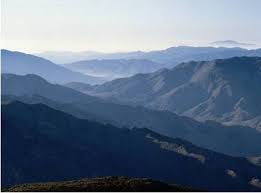

Image result for Non- Visual Cues distance perception


(b) Aerial perspective: When you look at buildings in the city, buildings close
by look clearer and their boundaries (contours) are well defined in comparison
to distant ones, which look gray and hazy. The buildings, trees, and other
objects that look hazy are perceived far away in comparison to those which
look clear.

Image result for Non- Visual Cues distance perception

(c) Linear Perspective: When parallel lines recede into the distance, as rail
road tracks, they converge towards a point in your retinal image. Further, the farther away two objects are in the visual field, the closer they will appear to be to each other. On the other hand, the two objects nearer to us appear further apart from each other. This cue appears much later in children.

Image result for Non- Visual Cues distance perception


(d) Lights and Shadows : We are often aware of the source and direction of
light. It is generally from above, as sunlight. The shadows cast by one object
on another can indicate which object is farther away.

Image result for Non- Visual Cues distance perception

(e) Familiar Size: Because you know the height of your friend, you can judge
the distance at which he is standing. This is possible because we always store
the memory image of objects that we see. When we look at an object which
is away from us we can interpret the distance form the retinal image by taking
into account the familiar size. You can do this activity. Take a playing card and
present it to your friend at a distance of 10 ft from him. Ask him to judge the
distance at which the card is placed. He will be quite accurate in judging the
size of the playing card. Because he is familiar with the size of the card, which
is always of the same (standard) size.
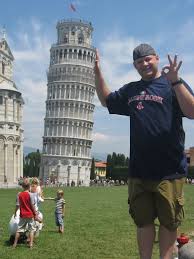
Image result for Non- Visual Cues distance perception


(f) Texture-Density Gradient : Look at the ploughed field, the nearer surface
looks rough and as we extend our vision farther away the texture gets finer.
Similarly, if you look at the grass nearby, you will be able to see the blades of
grass clearly, but as you extend your vision to a distant point the ground looks
as if painted green and the blades of the grass are no more visible. This texture
gradient is a cue to distance. The objects lying on a surface that look fine and
smooth in texture are perceived at greater distance than those objects on a
rough surface.
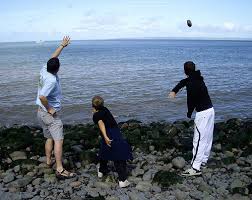
Image result for Non- Visual Cues distance perception


Binocular cues ppt: http://www.slideshare.net/duncale/edu290-depth-perception-presentation
the file


Eye cues

a. Accommodation: The image of the external objects is focused on the retina with
the help of lens in the eye. The lens is adjusted by the Ciliary muscles to focus
far and near objects on the retina. The ciliary muscle changes the convexity of the lens so that the image of the object is clearly focused and this process is called accommodation. If the object is relatively at a distance (more than 2 meters or so) the ciliary muscle is relaxed. When the object comes nearer and nearer the muscle contracts more and more, making the lens more convex. The degree of contraction of the ciliary muscle, signaled to the brain through Kinesthetic impulses is a possible cue of distance. That is, if the object is farther away from the viewer, the ciliary muscle is relaxed and when the object is nearer the ciliary muscle is tense. The extent of contraction in the ciliary muscle fed back to the brain is the cue of accommodation.
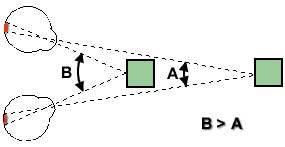
Image result for Accommodation depth perception

b. Convergence: When you read the letters of this printed line, you converge
your eyes (with the help of six intra-ocular muscles located outside each eye)
to bring the image in both eyes to fall on the fovea of each eye for fusion and
clear vision. The extent of convergence achieved is signaled to the brain and this
provides a cue to distance. For example, if the object is nearer the angle of
convergence will be large and as the object goes farther away the angle of
convergence decreases. For objects at a far away distance the eyes are more or
less parallel. The extent of convergence achieved is fed back to the brain and it is a cue to distance.

(ii) Binocular Cues : These cues are:
a. Double images
b. Binocular disparity

a. Double images: You have already learnt that when we fixate our eyes on an
object in space, fusion takes place and we see one object. However, when we
fixate on an object, all other objects nearer or farther than the fixation point fall on the non-corresponding points and produce double images.You can try this phenomenon. Take two pencils, hold them vertically in a line in front of your nose, one nearer and the other farther away. Now, fixate your eyes on the nearer pencil, the image of this pencil falls on the corresponding points.

FACTORS INFLUENCING PERCEPTION


At any particular time there are many competing stimuli out there which will gain
our attention and result in perceptual organization. The stimulus characteristics are important, as are our own internal needs, motivations, and our specific sociocultural back ground in which we have been reared. All these factors, stimulus variables and internal factors peculiar to an individual, determine how our perceptions are organized. In the following section you will learn how the stimulus and internal factors determine what we perceiv

i. Context and Set-effects
ii. Needs and motives
iii. Social and Cultural factors.

i. Context and Set-effects
A given stimulus may provide radically different perceptions because of the
immediate context. The context creates an expectation in our brain (top-down
phenomenon) that influences our perception at a particular moment. For example,
in noisy conditions you are verbally provided with a sentence “eel is moving”. You
will perceive the word “eel” as "wheel" because of the context provided by the
later part of the sentence. Similarly provide a stimulus verbally “eel the orange”. You will perceive the word “eel” as peel. This is because the later word “orange” provides an expectation for the perception of earlier word.
Perceptual sets also influence our perceptions. Perceptual set refers to our mental expectancies and predispositions to perceive one thing and not another. Perceptual set can influence what we hear as well as what we see. Broadly speaking our educational, social, and cultural experiences shape what we perceive. In other
words, our learned assumptions and beliefs help us in organizing our perceptions.
For example, if we hold very strong beliefs about God, the temple is perceived as
a place that gives us peace, love, solace, affection, and a satisfying experience.
Similarly, stereotypes (a generalized belief about a group of people) help us to
perceive persons we meet first time. Much of our social interaction is determined
by the stereotypes we hold about individuals and groups.

(iii) Needs and Motives
We have seen above that immediate Context and perceptual sets affect our
perceptions. Similarly, personal variables, like needs, emotions, values, personality,etc. influence our perceptions. An example will demonstrate the effect of need state on the perception of an individual. Two men, a hungry and another thirsty, go to a restaurant and the waiter hands over to each a menu for obtaining order. It was found that, at a quick glance, the hungry man could see eatable items in the menu and the thirsty drinks. This example supports the hypothesis that need states of individuals affect their perceptions. It has been found that emotions, motivation, and personality factors influence our perceptions. For instance, while studying the effect of reward and punishment on the organization of one’s perception, it was found that children perceived significantly more often rewarded aspects of the figure-ground stimuli in comparison to the punished.

(iii) Social and Cultural factors
Perceptual learning and development takes place in the context of socio-cultural
environment. Our perceptions reflect the effect of past learning and, therefore, if learning and socialization takes place in a particular socio-cultural background it will be reflected in our perceptions. A large number of studies support the hypothesis that culture influences our perceptions. It has been found that the Africans living in dense forests displayed greater illusion in the Vertical – Horizontal figure and Western-Urbans in the Muller –Lyer figures. The differences have been explained due to their experiences in different culture. So, it should be clear to you that cultural background influence the individual to perceive the world differently.

Wednesday, August 12, 2015

Process theory of motivation


Instrumentality (I->O)

Instrumentality is defined as the link between performance and outcomes. It involves how much effort is needed to lead to the desired outcome. (L4, pg 5).
Since politics play a key role in this, it is likely that employees in our case study who are not in favor of the TL and AL are going to have low instrumentality. That being said, high performance and hard work does not lead to consistent outcomes, or perceived rewards and motivation will be low.
For the employees who do have friendships with the TL and AL, instrumentality will remain high because rewards or outcomes will be based on friendship, which they have. For these employees, performance will not need to be high as the outcomes desired are not based on this. 

Valence (V(R))

Valence is the idea and perceptions the employees have on the desirability of available outcomes. This can range from -1 to +1 and depicts both results the employees would rather avoid as well as results they would like to see. (L4, p. 5). It is important to consider that not everyone has the same perceptions and attitudes about the appeal of certain outcomes. 
In our case study, the employees were prompted with a bonus to be paid out at the end of their assignment, if they receive a favorable rating. This is a positive valence. Additionally, however, there are a variety of other results, both good and bad, possible for the employee. Praise, autonomy, a sense of belonginess - these are all examples of possible benefits due the employees by the TL and AL. How much value the employee places on this (or the avoidance of this) is represented by Valence.  


Wednesday, July 1, 2015

PSYOP RESEARCH METHODOLOGY

PSYOP is the dissemination of truthful information to foreign audiences in support of policy and national objectives. Used during peacetime, contingencies, and declared war, these activities are not a form of force, but are force multipliers that use nonviolent means in often violent environments.

Truthful information is collected through different methods as Survey, experiments and field studies.

Survey

It is a procedure for collecting information by asking members of some population a set of questions and recording their responses. It is useful for identifying the average or typical response to a question as well as the distribution of responses within the population.

Types of survey:

Interview survey: Asking series of questions face to face  from interview schedule and recording answers. Same questions will be given to all respondents. Interviewer sometimes follow flexibility in asking questions following support (supporive interview). Exact order and wording of questions sometimes differ but all topics should be covered.

Questionnaire survey:  Instead of face to face interview, a series of questions on paper are presented to respondents and data were collected. The questions should assess individual differences, discrimination between high and low  groups, internally consistent. Questionnaire should be reliable and valid.

Experiment

The method to assess effect of independent variable (manipulated by researcher) on dependent variable in controlled conditions (making other variables constant or controlled in order to  prevent them from influencing the dependent variable and confusing the result.

Types of experiments:

True experiment:    In a true experiment, subjects are randomly assigned to the treatment conditions (levels of the independent variable). The only differences in the groups would be due to chance. True experiments are excellent for showing a cause-and-effect relationship.


There are three criteria that must be met in a true experiment
  1. Control group and experimental group
  2. Researcher-manipulated variable
  3. Random assignment
Quasi-experiment:  

Quasi-experiments are sometimes called natural experiments because membership in the treatment level is determined by conditions beyond the control of the experimenter (subjects are already in the box). An experiment may seem to be a true experiment, but if the subjects have NOT been randomly assigned to the treatment condition, the experiment is a quasi- experiment (quasi = seeming, resembles).


Field studies:

A field study refers to research that is undertaken in the real world, where the confines of a laboratory setting are abandoned in favor of a natural setting. This form of research generally prohibits the direct manipulation of the environment by the researcher. However, sometimes, independent and dependent variables already exist within the social structure under study, and inferences can then be drawn about behaviors, social attitudes, values, and beliefs. It must be noted that a field study is separate from the concept of a field experiment. Overall, field studies belong to the category of nonexperimental designs where the researcher uses what already exists in the environment. Alternatively, field experiments refer to the category of experimental designs where the researcher follows the scientific process of formulating and testing hypotheses by invariably manipulating some aspect of the environment. 

APPLICATION IN PSYOP

Survey
Surveying Public Opinions During Stability and Support Operations:
PSYOP Support to the First Marine Division in Iraq


Ref: http://www.psywarrior.com/PSYOPSurveysinSASO.html


Single-subject experiments

Instead of comparing behavior or performance of groups of people at a single point in time, a single-subject experiment involves a single case studied over a longer period of time. One individual or situation is exposed to the varying levels of the independent variable.


The most simple single-subject research design is termed ABA, where A is the baseline (non-treatment or control) condition or phase. B refers to the introduction of the treatment factor. Behavior is recorded in both stages. Then there is a return to A to see if in fact it was B that brought about the change. An example might be treating a hyperactive child with a drug. Stage A involves recording the child's behavior before any treatment, e.g., how many disruptive events in the classroom within a specified period of time. Stage B would involve the same measurement after the child has been treated. If B (the treatment) makes a difference, returning to level A (no treatment) should result in a return of the disruptive behavior. The basic research design can include a second treatment phase -- ABAB, thereby increasing the reliability and internal validity of the results.


Types of experiments:

Laboratory experiment:

Field experiment:


            It has four levels -individual, state, interstate and international.  United nations is international psyop. To identify more and less violence prone areas, following indicators maight be considered. The indicators are: low
crime rates, minimal incidences of terrorist acts and violent
demonstrations, harmonious relations with neighboring
countries, a stable political scene and a small proportion of
the population being internally displaced or refugees can be
equated with peacefulness.

  1. PSYOPS takes many shapes and forms. It can be used at a national or regional level or down to a small
    group or personal level. The purpose is always to promote the objectives of the originator and diminish
    the will of the opponent to resist or fight. Most conventional methods require some degree of trust or
    belief by the opponent in the originator’s message. Some unconventional methods work when no trust or

    connection exists. As shown in the Viet Nam example, the originator can unwittingly self-inflict PSYOPS

Sunday, June 28, 2015

Psychological Operations


What is Psychological operations (PSYOP) ?

Psychological Operations or PSYOP are planned operations to convey selected information and indicators to audiences to influence their emotions, motives, objective reasoning, and ultimately the behavior of organizations, groups, and individuals.


Why is it important ?
PSYOP is important to weaken the enemy psychologically and to capture the heart of civilians of enemy country. Interestingly, there is no loss of bullets but national objectives can be met. 

"Psychological operations...have proven to be indispensable...it allowed
us to apply a type of power without necessarily having to shoot bullets.
Colonel Andy Birdy, Commander, (1st Brigade Combat Team,10th Mountain Division, 
during Operation UPHOLD DEMOCRACY in Haiti)."

Is PSYOP necessary for war only ?
No, PSYOP can be provided before, during and after the war. PSYOP is oriented to both military and civilians. PSYOP acts as security during no war and operations to achieve national objectives. 

Is there any PSYOP soldier ? 
PSYOP is part and parcel of the warfare ? Psyop soldiers influence the emotions, motives, reasoning and ultimately the behaviour of foreign country. They affect and reinforce foreign attitudes and behaviour favourable to the objectives. They shape the civil environment and set the conditions for military operations by mitigating or defeating threats to civil society working directly with local populations, intergovernmental and nongovernmental organizations.  US maintains PSYOP soldiers. 


How does PSYOP act ?
PSYOP forces primarily conduct operations at the operational and tactical levels of war, and during military operations other than war (MOOTW). PSYOP forces also support strategic operations.

a) At the operational level, they support combatant commanders and commanders, joint task forces (CJTFs).

b) At the tactical level, PSYOP forces support conventional forces and special operations forces (SOF).

c) PSYOP units can conduct strategic activities in support of the President and/or Secretary of Defense (SecDef) and the Chairman of the Joint Chiefs of Staff (CJCS), when directed. PSYOP are inherently joint, frequently combined, and must be integrated and synchronized at all echelons to achieve their full force multiplier potential. 

What are the roles of PSYOP soldier ?

PSYOP Soldiers can perform following five roles:

• Influence foreign populations by expressing information subjectively to influence attitudes and behavior, and to obtain compliance, noninterference, or other desired behavioral changes. These actions facilitate military operations, minimize needless loss of life and collateral damage,

 • Advise the commander on  enabling actions, and targeting restrictions that the military force may execute. These actions and restrictions minimize adverse impacts and unintended consequences, attack the enemy’s will to resist, and enhance successful mission accomplishment.

PSYOP Soldiers also advise the commander on the psychological effects and consequences of other planned military actions and operations.

• Provide public information to foreign populations to support humanitarian activities, restore or reinforce legitimacy, ease suffering, and maintain or restore civil order. Providing public information supports and amplifies the effects of other capabilities and activities such as civil-military operations (CMO).

• Serve as the supported commander’s voice to foreign populations to convey intent and establish credibility. This ability allows the commander to reach more audiences with less expenditure in resources and time.

• Counter enemy propaganda, misinformation, disinformation, and opposing information.

Is PSYOP important for border security forces or state police?

Border security forces and State police at the border areas are affected by migration. Migration refers to  "the movement of people from one place to another".
There are two main types of migration: first, internal
migration, i.e. migration within one country, and secondly
international migration, which means the movement from one
country to another.
A good example of internal migration is the movement from
Bihar to West Bengal and a good example of international migration is from Bangladesh to West Bengal or from Pakistan to India.
   Migration is caused by  "push" and "pull" factors.
Push factors are those in their old place which force people
to move. For example, there may be civil wars or wars in
general in the country, but political or religious oppression,
climate changes, lack of jobs or simply poverty are all
important push factors.
Pull factors are factors in the target country which encourage
people to move; these include peace and safety, a chance of
a better job, better education, social security, a better
standard of living in general as well as political and religious
freedom.

Migration factors:
The first migrations from Bihar date back to 1834. Every second family in the state today is sustained by migrant workers who form the backbone of the country's workforce. But in 2008, thousands of Biharis found themselves forced to return from Maharashtra following the Maharashtra Navnirman Sena's sons-of-the-soil campaign. After decades selling bhelpuri on Mumbai's Chowpatty or working as construction labour, Bihar's migrants were shocked to find themselves treated like outsiders in their own land. 

Paswan said his village in Samastipur typifies the situation in the state, surrounded by poverty, filth and violence. "It has no road, no electricity, no education, no health facilities," he said. Like most young men of the village, Paswan migrated to Mumbai at the first opportunity, in 1998. He chose to become a migrant like hundreds of others in his village of a few thousands.

PSYOP should study human development indicators for predicting migration:


The report indicates that Bihar lags behind other states on all the development indices. It was ranked at the bottom in the Human Development Indicator (HDI), which was about 20% lower than the national HDI.
With an estimated population of 90.2 million (83 million, according to the 2001 census), 536.91 lakh people live below the poverty line in Bihar. No wonder the Bihar government's claim of economic achievement, with the Gross Domestic Product (GDP) growth rate stated to be 16%, drew flak from many economists in the state who questioned the very rationale of the economic survey.
The economists point out that the state's claims cannot be true when Bihar, an agrarian state, recorded a drastic fall in foodgrain output, power generation was almost negligible, and industrial growth barely touched 5.5% compared with the national rate of 20.1%.
"Low wages combined with employment uncertainty, lack of educational institutions combined with lack of industry, and absence of market and investment opportunities means the Bihari migrants, whether educated or not, and their progeny, cannot come back, even if they want to," said Srikant, who believes that the well-established internal migration chain that pushes millions of people from Bihar to all parts of India in search of a livelihood is unlikely to halt due to the recent events in Maharashtra.
Ref: http://infochangeindia.org/agenda/migration-a-displacement/the-original-migrants.html
There are some other factors that influence migration.

Simultaneously in rural India, deep agricultural transformations are taking place, altering the landscape, the available opportunities, and ultimately the livelihoods of its people.

Function of PSYOPS


Simultaneously in rural India, deep agricultural transformations are taking place, altering the landscape, the available opportunities, and ultimately the livelihoods of its people.


Does mass communication help in  PSYOP ?
Both one-window and multi-window wise mass communication systems are used in PSYOP. Mass communication is the study of how individuals and entities relay information through mass media to large segments of the population at the same time. It is usually understood to relate to newspaper, magazine , and book publishing, as well as radio , television and film, as these mediums are used for disseminating information, news and advertising . Mass communication differs from the studies  of other forms of communication, such as interpersonal 
communication or organizational communication , in that it focuses on a single source transmitting information to a large group of receivers. The study of mass communication is chiefly concerned with how the content of mass communication persuades or otherwise affects the behavior, attitude , opinion, or emotion of the person or people receiving the information.

What are the tools of PSYOP ?
Besides mass communication, other systems like leaflets, hoardings, rumours and propaganda are used.

What is propaganda ?
Ideas or statements that are often false or exaggerated
and that are spread in order to help a cause, a political
leader, a government, etc.

Is propaganda structured? 
Propaganda is structured in a systematic way. Edward S Herman and Noam Chomsky suggested propaganda Theory. The theory postulates five general classes of "filters" that determine the type of news that is presented in news media. These five classes are: Ownership of the medium, Medium's funding sources, SourcingFlakfear ideology.


Ownership: Government

Media should focus on news of  "the Prime Minister's personal spokesperson" for government news. Business corporations and trade organizations are also trusted sources of stories considered newsworthy. 

Web: 
About propaganda leaflets:
http://www.paperlessarchives.com/korean_war_propaganda_leaflets.html
History of PSYOP:
http://www.psywarrior.com/psyhist.html
Conceptual overview:
file:///C:/Users/DDROY/Downloads/strategicanalysis_snarula_0304.pdf
Ref: https://fas.org/irp/doddir/army/fm3-05-30.pdf


Psychological field management: Psychological fields are not the manifested but
latent contents of human mind. It includes emotions, perception, attitude, belief, 
reasoning.and personality. This can be understood through force field management. 

Force field management: Force Field Analysis was developed by Kurt Lewin (1951) and is widely used in decision making, particularly in planning and implementing change management programmes. It is a powerful method of gaining a comprehensive overview of the different forces acting on a potential organisational change issue, and for assessing their source and strength. Combat or war situation is dynamic and it is affected by different driving and restraining forces. Lewin assumes that strategic decisions are determined by driving movement toward a goal (helping forces) or blocking movement toward a goal (hindering forces). Strategic decisions make the life space or group equilibrium. Equilibrium occurs when particular forces are held in balance by the interaction of two opposing forces.


Above picture shows two opposite forces are acting in order to make equilibrium state.
Strength of the forces are different.

Force field analysis in Army career (Individual level)


Driving forces

Achievement 
Restraining forces:
Integrating with sophisticated weapon
Long hours of work


http://www.psicopolis.com/kurt/lewinsintesi.htm


Mental Health Data Analytics

Ref: http://www.emr-ehrs.com/mental-health-electronic-health-records.php


This open source EHR, developed by the U.S. Veteran’s Administration, is, like PracticeFusion, a more general software solution not explicitly built for mental health offices. That said, the depth of its mental health add-on module is such that it warrants inclusion on this list.


VistA includes a strong mental health module. This module includes DSM-IV and ICD-9 diagnoses, psychological tests and interview results, and a mental health addiction severity index. Additionally, VistA is a proven system, having been in use for decades, and comes with frequent support and updates from the government, as well as a robust support community and multiple versions to use.
However, VistA is an older program, and despite continuous updates does have a somewhat dated-looking user interface. Additionally, because VistA is a fully integrated suite of solutions, you may find yourself constrained within the VistA ecosystem, and if you’re a solo practitioner or smaller practice VistA’s size and comprehensiveness may not be a good fit for you.

Seasonal variation of psychiatric disorders in big data analysis:
https://epianalysis.wordpress.com/2013/04/23/dataminementalhealth/


Measuring behavioural expenditure
http://truvenhealth.com/solutions/behavioral-health